
Four steps. Hundreds of tiles. One piece at a time.
From raw ceramic to finished mosaic art — every piece passes through four careful stages.
The ceramic body is shaped using precision molds — bowl and pedestal base — then bisque-fired at high temperature.
A food-safe glaze is applied to the interior and rim, then fused permanently in a second firing.
Colored ceramic tiles are placed by hand onto the pedestal base — cobalt, teal, gold, terracotta, and cream.
A protective finish locks every tile in place. Each piece is inspected for adhesion, edges, and color before shipping.
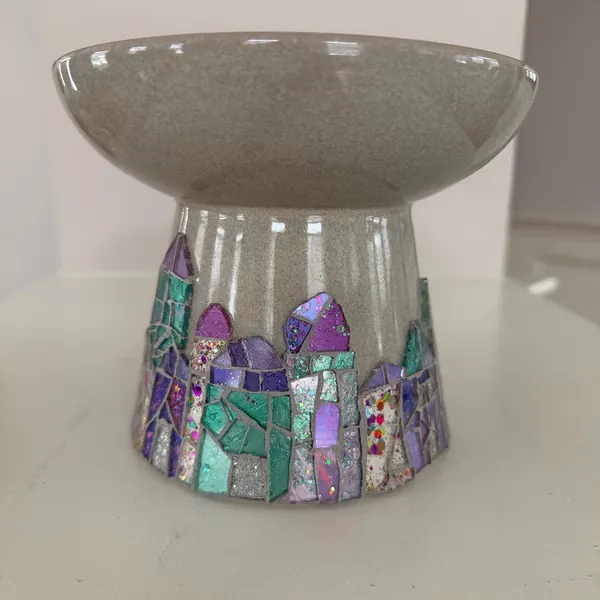
The journey begins with the ceramic body. Using precision molds, the piece and pedestal base are shaped from high-quality ceramic material — each piece handcrafted in Burke, Virginia. The formed pieces are loaded into a kiln for bisque firing at high temperature, hardening the ceramic into a durable foundation that will last for years of daily use.
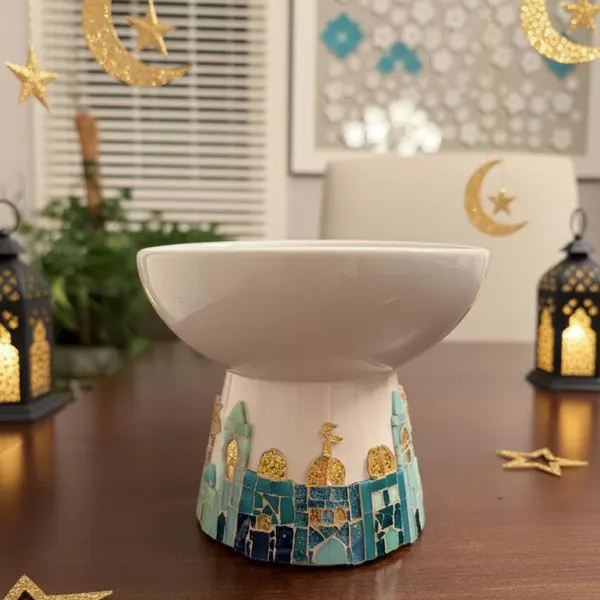
The piece — the part you eat from — receives a food-safe glaze that is designed to meet food-contact safety standards. This glaze is carefully applied to the interior and rim, then the piece goes back into the kiln for a second firing. The result is a smooth, sealed surface that's safe for serving, eating, and everyday gathering. The glaze firing fuses the coating permanently to the ceramic body.
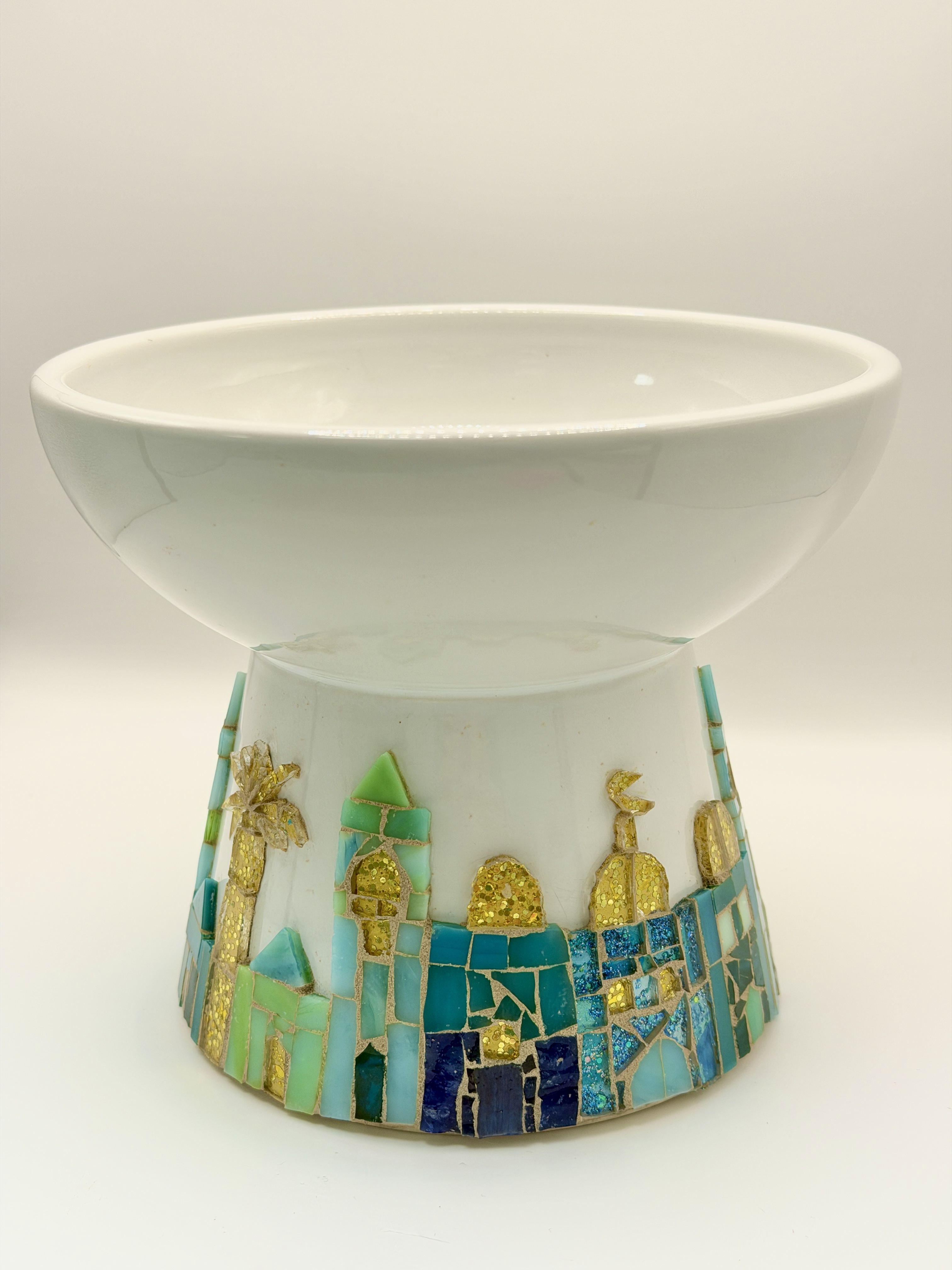
This is where the art happens. Small colored ceramic tiles — in cobalt, teal, gold, terracotta, and cream — are placed by hand onto the pedestal base. Tile by tile, artisans build geometric patterns drawn from the tilework found in ancient palaces across Damascus, Granada, and North Africa. Each piece takes individual attention. No two are exactly alike. The slight variations are part of the hand-finished character.
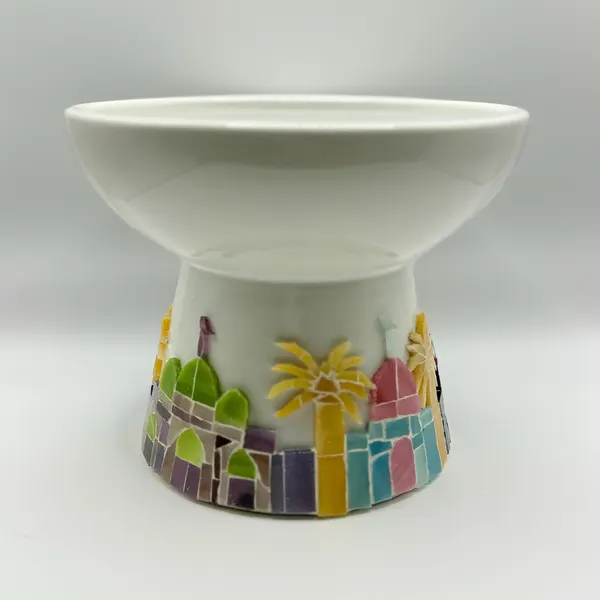
A protective finish is applied over the completed mosaic, locking every tile in place and protecting the surface from everyday wear. The sealed mosaic is inspected for adhesion strength, sharp edge control, and color consistency. Only pieces that pass all quality checks move forward to packaging.
Every piece is inspected before it ships. Standards are confirmed with each production run.
Tiles must be firmly bonded with no looseness.
No exposed tile edges that could catch or cut.
Tiles match the approved color palette for each design.
Bowl interior uses food-safe glaze for food contact.
Consistent across the production run.
Browse the full collection or follow along on Instagram.